วันอาทิตย์ที่ 23 กันยายน พ.ศ. 2555

Preikestolen, Norway


Preikestolen or Prekestolen, also known by the English translations of Preacher’s Pulpit or Pulpit Rock, and by the old local name Hyvlatonnå (“the carpenter-plane’s blade”), is a massive cliff 604 metres (1982 feet) above Lysefjorden, opposite the Kjerag plateau, in Forsand, Ryfylke, Norway. The top of the cliff is approximately 25 by 25 metres (82 by 82 feet) square, almost flat, and is a famous tourist attraction in Norway.


The cliff overlooks the densely and colorful green valleys of the Ryfylke region. The mountains surrounding the cliff reach heights of up to 843 meters. Some of the hilltops have plains which are interspersed with lakes.


วันศุกร์ที่ 14 กันยายน พ.ศ. 2555

100 places to see before you die


Some said that there are about (or more than) 100 places to see before you die. Let's see what are they with  these video (many thanks to  )  


Positano, Italy


Positano is one of the highlights to visit when you come to Italy. With all its chic hotels, apartments and fancy restaurants it’s managed to maintain its traditional character. 


The stunning coastline from Capo di Sorrento to Positano is an adventure on itself. Not many people know that Positano is originally not a fishermans village, but a mountain village. During the 14th and 15th century the little villages along the Amalfi Coast acted as an independent country. 


Iguazu Falls, Argentina & Brazil


Taller than Niagara Falls, twice as wide with 275 cascades spread in a horsehoe shape over nearly two miles of the Iguazu River, Iguazú Falls are the result of a volcanic eruption which left yet another large crack in the earth.


During the rainy season of November – March, the rate of flow of water going over the falls may reach 450,000 cubic feet (12,750 cubic m) per second.


Bagan, Myanmar


Bagan is notable for its expanse of sacred geography, the number and size of their individual ancient monuments. The ruins of Bagan cover an area of 16 square miles. The majority of its buildings were built in the 11th to 13th centuries, during the time Bagan was the capital of the Myanmar dynasty. 

 Bagan is also the first place to have transformed into a religious and cultural centre, by Shin Arahan who brought Theravada Buddhism to this land. 


Bagan is full of ancient architectural designs, mural paintings, precious frescoes and stone inscriptions to see for yourself, and also it is the centre for the manufacturing of lacquerware products in Myanmar. 


Socotra Island, Yemen


Socotra is one of the most isolated landforms on Earth of continental origin. Socotra is considered the jewel of biodiversity in the Arabian Sea. 

The long geological isolation of the Socotra archipelago and its fierce heat and drought have combined to create a unique and spectacular flora.
Botanical field surveys led by the Centre for Middle Eastern Plants indicate that 307 out of the 825 (37%) plant species on Socotra are endemic, i.e., they are found nowhere else on Earth.


The Great Wall of China


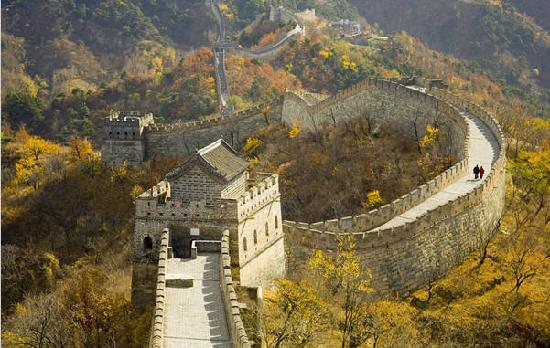
The Great Wall of China, one of the greatest wonders of the world, was listed as a World Heritage by UNESCO in 1987. Just like a gigantic dragon, the Great Wall winds up and down across deserts, grasslands, mountains and plateaus, stretching approximately 8,851.8 kilometers (5,500 miles) from east to west of China.


With a history of more than 2000 years, some of the sections are now in ruins or have disappeared. However, it is still one of the most appealing attractions all around the world owing to its architectural grandeur and historical significance


The Phi Phi Islands, Thailand


The Phi Phi Islands are located in Thailand, between the large island of Phuket and the western Andaman Sea coast of the mainland. 
The Phi Phi Islands is Thailand's island-superstar. It's been in the movies. It's the topic of conversation for travelers all over Thailand. For some, it's the only reason to touchdown in Phuket. Even with all the hype, it doesn't disappoint.


Classic beaches, stunning rock formations, and vivid turquoise waters teeming with colourful marine life – it’s paradise perfected.  


Antelope Canyon, USA

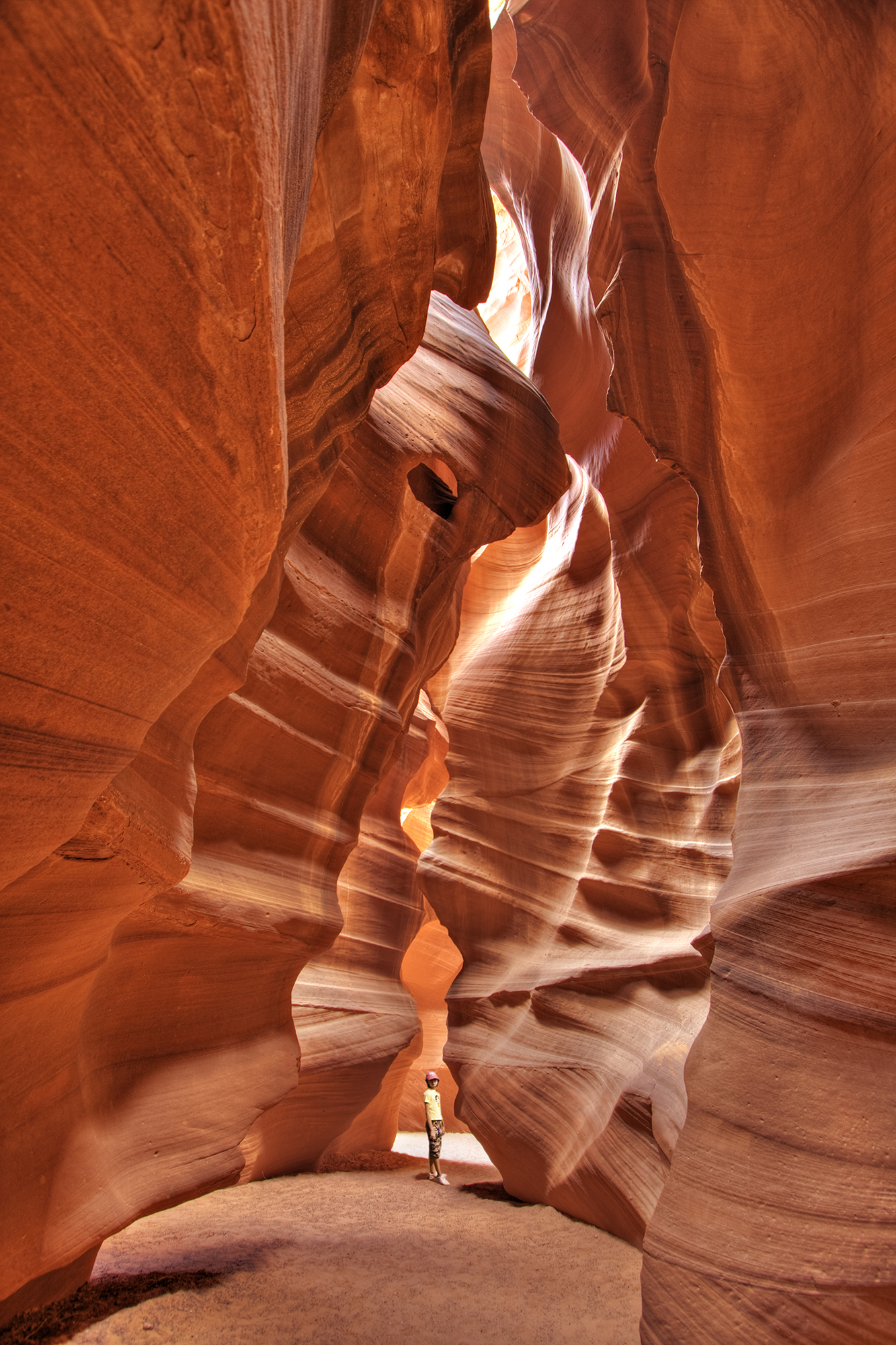
Antelope Canyon is the most-visited and most-photographed slot canyon in the American Southwest. It is located on Navajo land near Page, Arizona. Antelope Canyon includes two separate, photogenic slot canyon sections, referred to individually as Upper Antelope Canyon or The Crack; and Lower Antelope Canyon or The Corkscrew. The Navajo name for Upper Antelope Canyon is Tsé bighánílíní, which means “the place where water runs through rocks.” Lower Antelope Canyon is Hazdistazí, or “spiral rock arches.”
Antelope Canyon was formed by erosion of Navajo Sandstone, primarily due to flash flooding and secondarily due to other sub-aerial processes. Rainwater, especially during monsoon season, runs into the extensive basin above the slot canyon sections, picking up speed and sand as it rushes into the narrow passageways. Over time the passageways are eroded away, making the corridors deeper and smoothing hard edges in such a way as to form characteristic ‘flowing’ shapes in the rock.

Incan Ruin – Machu Picchu, Peru


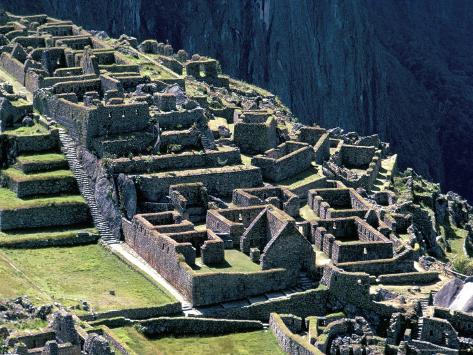
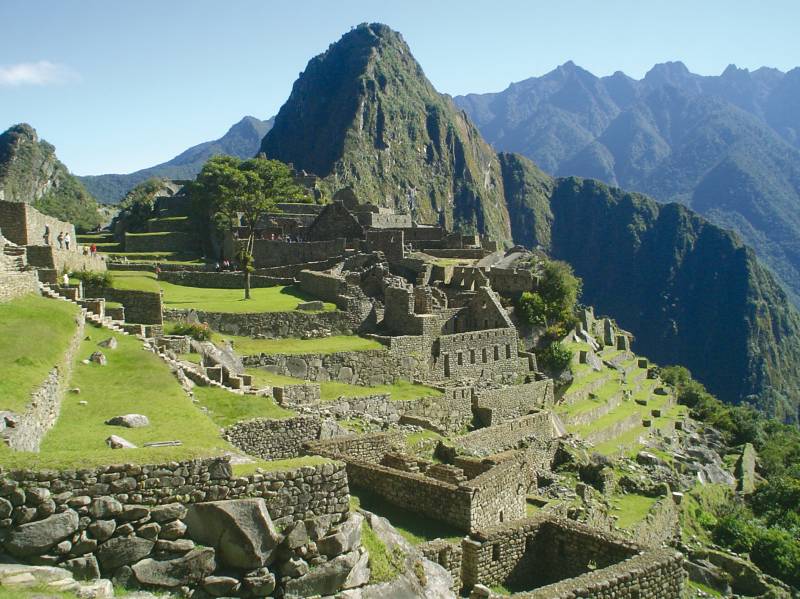
Machu Picchu, The lost city floating in a kingdom of clouds, high in the Andes Mountains of Peru, a mysterious settlement that the Incas built, occupied, and deserted, all in less than a century. For hundreds of years the city was hidden in the jungle. Then, in 1911, Hiram Bingham led a university expedition to the Peruvian Andes. On a valley floor along the Urubamba River, he met a farmer who guided him up to the ruins of the hidden city, the only Incan site that hadn’t been looted or destroyed during the previous four centuries.


Machu Picchu spans a mountain saddle between green jungle peaks. The settlement has only 200 residences, suggesting a population of about 1,000 people. The city contains a large number of religious buildings that were constructed with great care. One of them, the Temple of the Sun functioned as an observatory focused on the heavens. A mark cut on a rock at the center of the tower lines up, through a window, with the exact spot where the sun rises on the June solstice. In the temple’s recesses the Incas placed religious statues or offerings.

Read more: http://trifter.com/practical-travel/adventure-travel/top-10-places-to-see-before-you-die/#ixzz26TUcDjz5

Stonehenge, England


For an unforgettable family day out, visit the World Heritage Site Stonehenge.      


Stonehenge is a prehistoric, mysterious circle of upright stones in southern England.Construction on the great monument began 5,000 years ago; the famous stones that still stand today were put in place about 4,000 years ago.                          
 The true meaning of this ancient, awe-inspiring creation has been lost in the mists of time. Was Stonehenge a temple for sun worship, a healing centre, a burial site or perhaps a huge calendar? How did our ancestors manage to carry the mighty stones from so far away and then, using only the most primitive of tools, build this amazing structure? Surrounded by mystery, Stonehenge never fails to impress.

The Pyramids and the Sphinx, Egypt


You have to visit this amazing place, one of the Seven Wonders of the World, the Great Pyramid of Giza.
  1. The Great Pyramid of Khufu (or Cheops)
  1. The Pyramid of Kafhre
  1. The smaller Pyramid of Menkaura.
There are three main pyramids in Giza:
Each Pyramid is a tomb to a different King of Egypt. In front of the pyramids lies the Sphinx (or Abu al-Hol in Arabic, “Father of Terror”). Carved out of a single block of stone, this enormous cat-like sculpture has mesmerized millions of visitors.


Read more: http://trifter.com/practical-travel/adventure-travel/top-10-places-to-see-before-you-die/#ixzz26TJsRitQ


Sphinx

The Sphinx was carved over 4,500 years ago. It was for the Pharaoh Khafre. It had his head, the body of a lion. The Sphinx was carved out of a huge big stone. It is guarding Khafre's pyramid. The Sphinx was covered by sand which preserved it all these years. Its body is extremely soft rock and its head is very strong rock but some people used the head for gunshot practice. No one knows for sure what it was decorated with in the days of the Ancient Egyptians but it must have been very beautiful then.


Pyramids
The Pyramids were constructed to hide the tombs of the Pharaohs. The first pyramids were step pyramids to help the pharaoh climb the steps and join the sun god Ra in the sky. After that (about 4,500 years ago) came the biggest pyramids of all, the pyramids of kings Khufu and Khafre. Until about a hundred years ago these pyramids were the tallest structures in the world! No earthquake could destroy them. They were each built of more than 2 million blocks of stone, which each weighed about as much as a small elephant. The limestone coverings were stripped by later peoples for building use. In the pyramids were a lot of false doors to trick grave robbers but they didn't work!